


Vision and Purpose
At the American Community School of Abu Dhabi (ACS), we are committed to cultivating digital fluency and innovation mindsets.
Our program empowers learners to become creative, capable, and compassionate problem-solvers who are prepared to thrive in an increasingly interconnected and digital world. By merging human-centered methodology with technical expertise, we equip students with the skills and competencies required to solve real-world challenges in alignment with our core values.
Technology at ACS is integrated purposefully, enhancing rather than replacing authentic learning experiences. We prioritize human connection and hands-on learning, using digital devices only when they serve a meaningful instructional purpose.
Our Core Framework: Design Thinking
Design Thinking serves as the overarching methodology and core operating philosophy for our K-12 program. This iterative process moves students beyond simple task execution toward critical, empathetic creation.
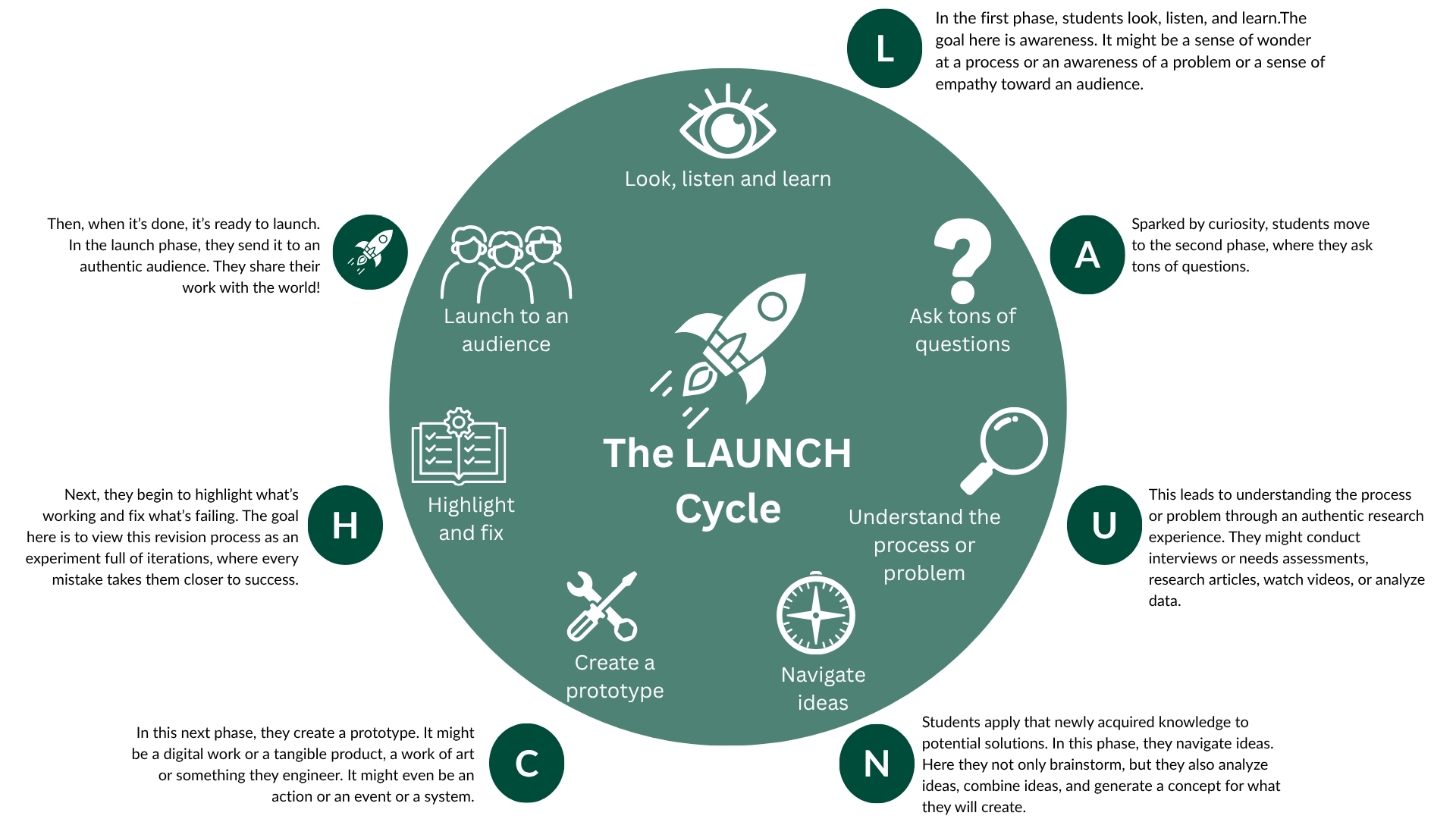
Elementary School (The LAUNCH Cycle): Our youngest learners follow John Spencer’s LAUNCH framework. Students progress through stages of awareness, questioning, authentic research, and prototyping, culminating in a final "launch" to an authentic audience.
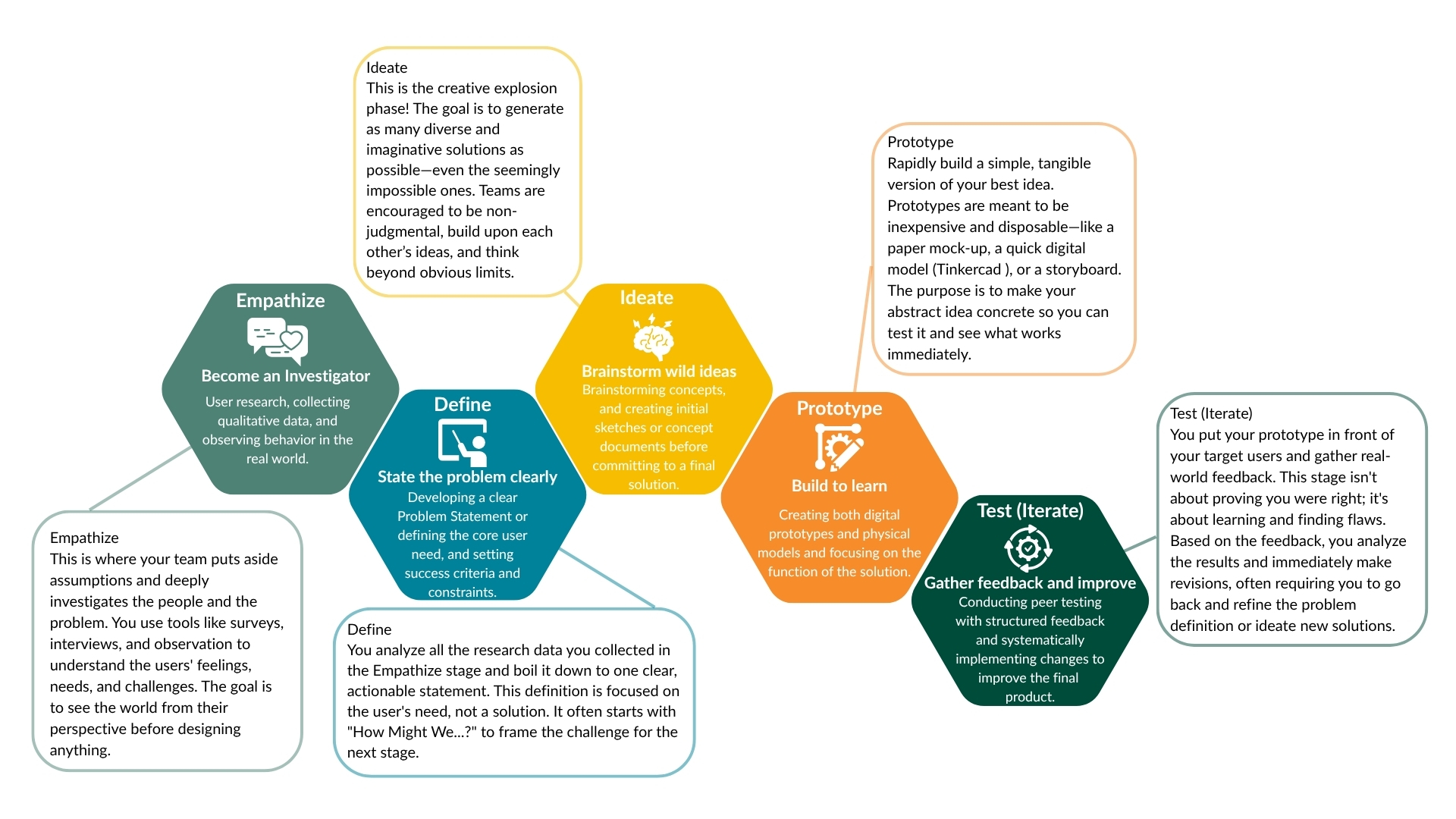
Middle & High School (The Stanford Design Thinking Model): Older students utilize the standard Stanford model. They engage in deep qualitative user research, formulate actionable "How Might We" problem statements, lean into non-judgmental ideation, and build rapid, disposable prototypes to gather real-world testing feedback.
The Four Technical Pathways
To ensure a comprehensive technical foundation, our curriculum is structured across four interconnected pathways. These provide a clear, project-based progression from foundational exploration in elementary school to industry-relevant specialization in high school.
Computational Thinking & Applied Computing
Logic, algorithmic strategies, and software development, progressing from block-based sequencing to full-stack engineering and data analysis.
Robotics & Physical Computing
The integration of electronics, sensors, actuators, and control systems to bridge code with reality via automation and complex robotic systems.
Engineering & Fabrication
Mechanics, material science, and manufacturing processes, scaling from cardboard construction to professional CAD software and CNC/laser fabrication.
Digital Media & Communication
Visual design, UI/UX (User Interface/User Experience), and graphic design to convey ideas and stories clearly and ethically.