


Purpose & Philosophy
At ACS, we believe technology is more than just a collection of tools. It is a powerful enabler of learning, creativity, and connection across all grade levels. We view technology as a means to deepen thinking, spark creativity, and support meaningful collaboration. Whether students are researching, designing, coding, composing, or reflecting, they are using technology to enhance their learning experience and develop future-ready skills.
Technology is integrated into learning across the curriculum, helping students to:
- make informed decisions about when and how to use digital tools.
- develop responsible, ethical habits in digital spaces.
- create, explore, and communicate learning in innovative ways.
We believe technology use should be …
- purposeful, enhancing rather than replacing authentic learning experiences.
- developmentally appropriate based on age, readiness, and context.
- a shared responsibility between school and home to foster healthy, reflective habits.
Values-Driven Technology Use
Digital wellbeing grows through an ongoing partnership between school and home. Our technology guidelines are grounded directly in the four core values of ACS.
Courage: Critically evaluating digital tools and speaking up immediately to report unsafe, inappropriate, or harmful behaviors online.
Curiosity: Embracing opportunities to responsibly explore, design, ask questions, and iterate using digital platforms.
Compassion: Acting with empathy and respect online. Technology must never be used to harm, exclude, bully, impersonate, or deceive others.
Integrity: Representing your own work honestly. Students must use technology in ways that align with school expectations, uphold academic honesty, and comply with UAE laws.
Responsible Use and Digital Citizenship
View the ACS K-12 Technology Philosophy & Responsible Use Policy
Our Approach to Screen Time: The 80/20 Framework
We understand that "screen time" is a common concern for families. At ACS, we believe the more important question is not how much time students spend on screens, but how they are using that time. We emphasize balance and purpose, helping students evaluate if their screen usage helps them create, understand deeply, or connect meaningfully.
To guide this balance, we use a research-backed 80/20 Framework:
80% Creativity & Reflection (High-Cognitive Use): Active, constructive creation such as writing, coding, visual editing, or digital design.
20% Productivity & Practice (Routine Use): Support tools such as researching, organizing files, or practicing skills.
0% Off-Task/Distracting Use (Prohibited): Non-purposeful activities like off-topic gaming, social media scrolling, or misusing shared documents.
Screen-Free Campus Zones: To prioritize human connection, recess, lunch, and transitions are entirely screen-free in both the Elementary and Middle Schools. All student phones and smartwatches must be turned off and kept away during the school day.
Our Artificial Intelligence (AI) Framework
View the ACS Artificial Intelligence (AI) Responsible Use Policy
ACS recognizes the transformative potential of Artificial Intelligence (AI). We believe that the use of AI should start with human curiosity and end with human judgment and insight, ensuring it remains intentional and grounded in human agency. AI is integrated across learning levels to serve as a guide for investigation, organization, and problem-solving, rather than as a replacement for critical thinking.
Core AI Safety Restrictions
Academic Integrity: Submitting AI-generated text or graphics as original student work without proper attribution constitutes academic misconduct.
Data Privacy (PII Protection): Entering any Private Identifying Information (PII)—including full names, student IDs, dates of birth, grades, or personal photos—into external AI tools is strictly prohibited to protect student data privacy.
Prohibited Content Generation: AI tools must never be utilized to create harmful, misleading, or emotionally manipulative content, including deepfakes, text spoofing, or cyberbullying material.
AI Access Matrix by Grade Level
Student access to AI tools is gated strictly by age-appropriateness, child data privacy regulations, and developmental readiness:
| Grade Level | Stage |
Access/Use Details |
|---|---|---|
| Lower Elementary (KG1 – Grade 1) | Modeling | Students do not have direct access. Staff use AI for professional practice and model ethical use transparently. |
| Upper Elementary (Grades 2 – 5) | Introducing | Direct access restricted. Starting in Grade 2, students explore safe chatbots via K-12 safe platforms (e.g., MagicSchool) with strict supervision by teachers. |
| Middle School (Grades 6 – 8) | Building | Strict teacher supervision for specific assignments. Approved: Canva, MagicSchool, Brisk, NotebookLM. Public apps restricted. |
| High School (Grades 9 – 12) | Applying | Direct access via managed accounts for investigation/feedback on teacher-approved assessments. |
Grade-Level Device Progression
Technology is integrated gradually across divisions with clear boundaries, age-appropriate tools, and increasing independence.

KG1
Shared iPads used sparingly with teacher guidance to support storytelling and language development.
KG2 to Grade 4
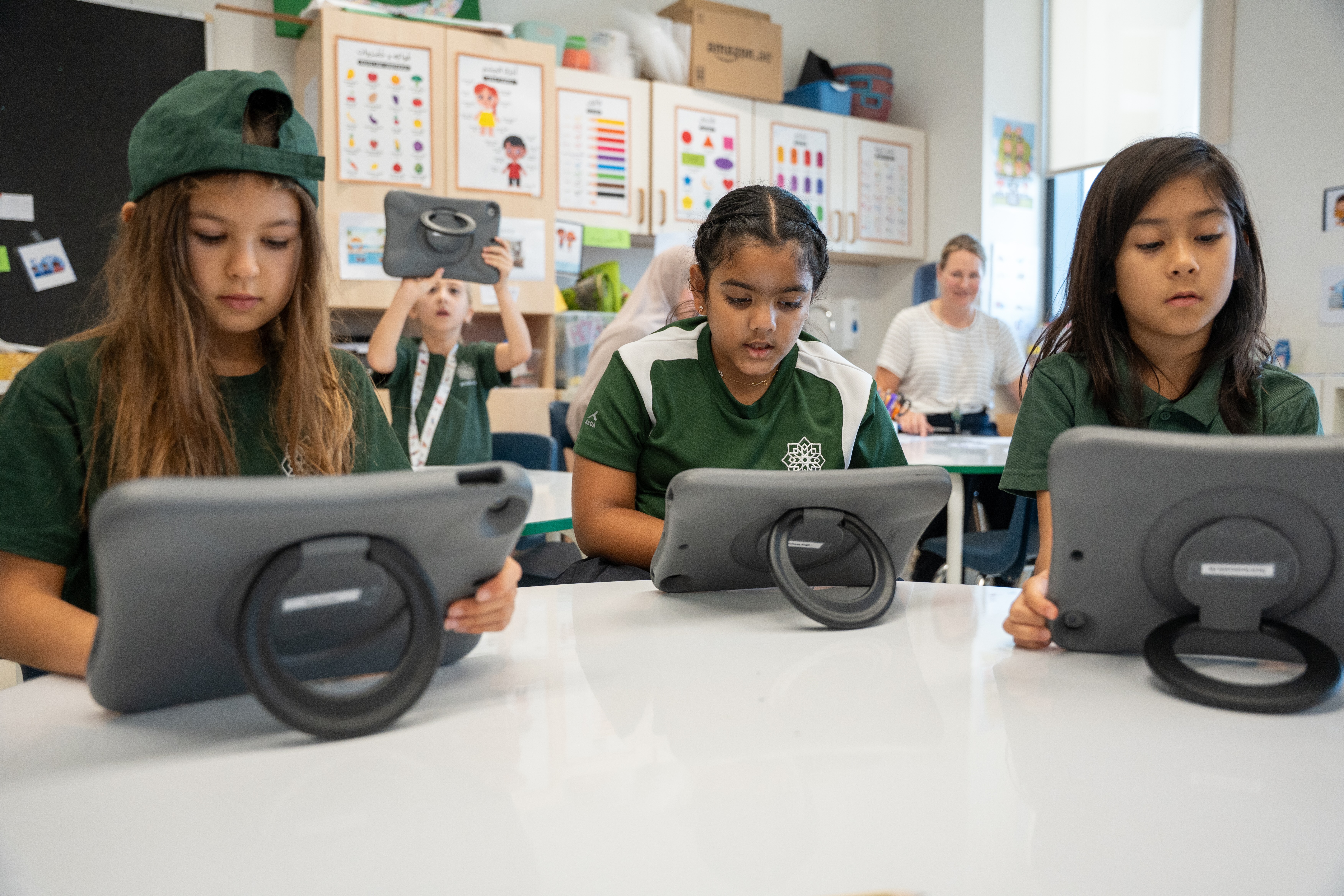
ACS-assigned iPads used in class to document learning and introduce foundational digital citizenship.
Grades 5-12
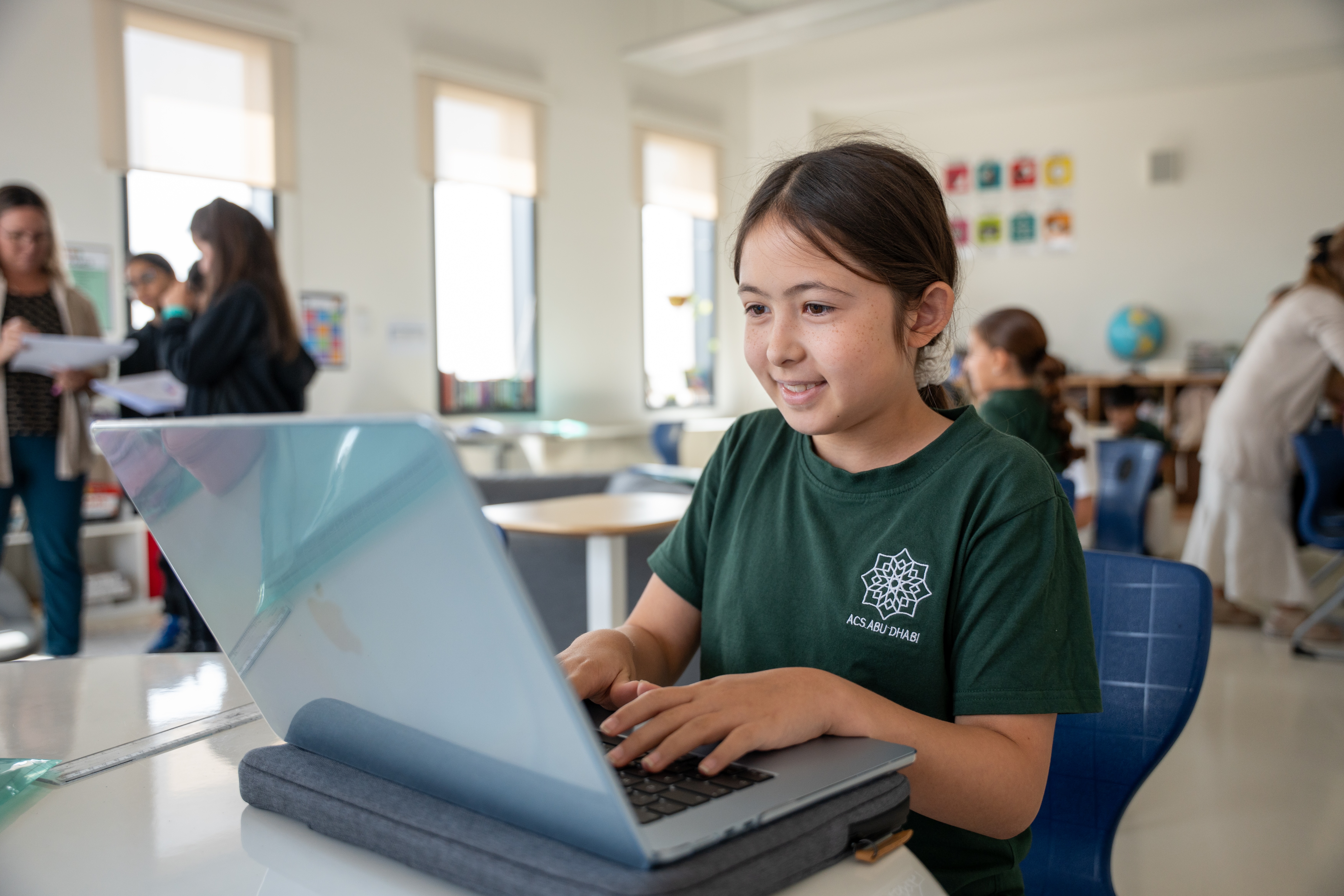
First year of the Bring Your Own (BYO) MacBook requirement, building independence in class.